
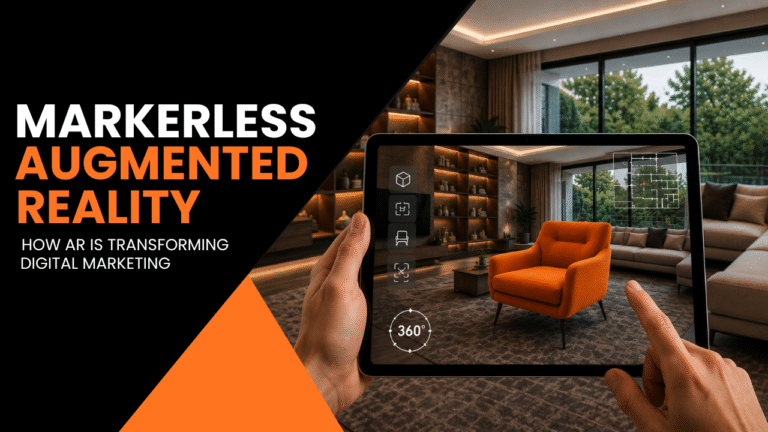
Digital marketing has changed dramatically over the last few years. Businesses are no longer competing only through advertisements, websites, and social media. They are competing for attention, engagement, and memorable customer experiences.
This is where augmented reality (AR) is becoming increasingly important.
Instead of simply showing customers a product through an image or video, augmented reality can allow them to experience digital content within their real environment. A customer can visualize furniture in their room, explore a 3D product, interact with a virtual object, or experience a brand in a completely different way.
One of the technologies making these experiences possible is markerless augmented reality.
Unlike traditional marker-based AR, markerless AR doesn’t require a printed image, QR code, or special physical marker to work. This makes it a flexible option for businesses looking to create more interactive digital experiences.
But what is markerless augmented reality, how does it work, and how can businesses use it for marketing?
Let’s explore.
What Is Markerless Augmented Reality?
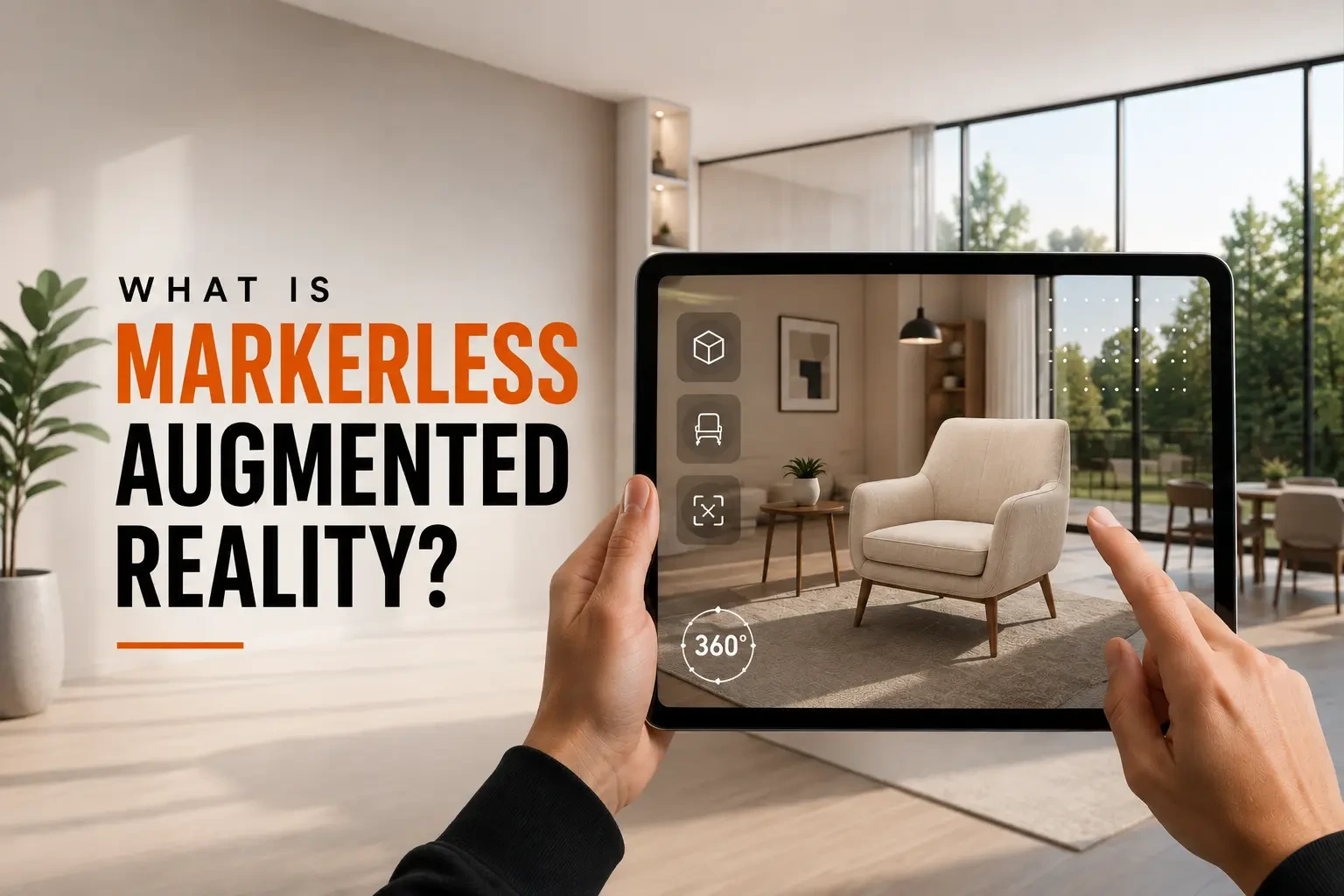 Markerless augmented reality is a type of augmented reality that allows digital objects or information to appear in the real world without requiring a predefined physical marker.
Instead of depending on a specific image or QR code, the technology can use a device’s camera, sensors, and computer vision to understand the surrounding environment.The system can identify surfaces and spatial information and then position digital content within that environment.
For example, imagine an online furniture store selling sofas. Instead of asking customers to imagine how a sofa might look in their home, the company could offer an AR experience that allows customers to place a virtual version of the sofa in their living room.
The customer can move around, change their viewing angle, and get a better idea of how the product fits into their space.No printed marker is necessary.This simple difference makes markerless AR particularly useful for modern digital marketing and e-commerce.
How Does Markerless Augmented Reality Work?
Although the experience can feel simple to the user, several technologies work together behind the scenes.A typical markerless AR experience follows a process similar to this:
- The camera scans the environment.
- The system analyzes visual information and surfaces.
- Sensors and computer vision help determine the device’s position and movement.
- The AR application identifies where digital content can be placed.
- A virtual object is positioned within the user’s environment.
- The digital object remains anchored as the user moves around.
For users, the process can be as simple as opening an AR experience and pointing their smartphone toward a suitable surface.
Marker-Based vs. Markerless Augmented Reality
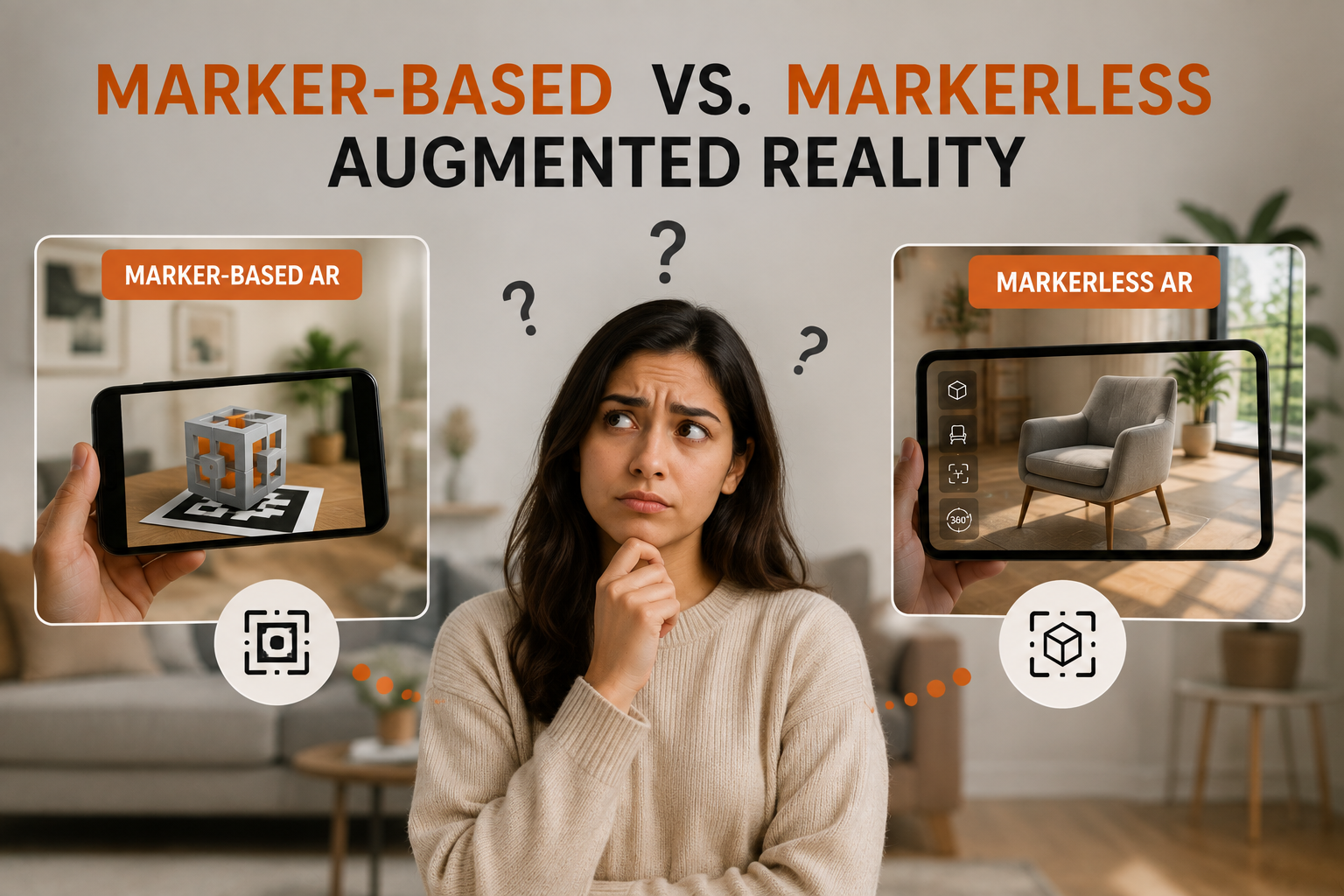 To understand the benefits of markerless AR, it helps to compare it with marker-based augmented reality.
What Is Marker-Based AR?
Marker-based AR uses a predefined visual target to activate or position digital content.This target could be:
- A QR code
- A printed image
- A logo
- A product package
- A magazine advertisement
- A specific graphic
When the camera recognizes the target, the AR experience can be triggered.
Marker-based AR can be useful for marketing campaigns involving packaging, brochures, catalogs, printed advertisements, and promotional materials.
What Is Markerless AR?
Markerless AR doesn’t require a predefined visual target.Instead, the system uses information from the user’s environment to determine where digital content should appear.This makes markerless AR especially useful for:
- Product visualization
- Virtual try-ons
- Interactive product demonstrations
- AR advertising
- Virtual showrooms
- Real estate visualization
- 3D product experiences
- Educational applications
The major difference is flexibility.
With markerless AR, users don’t necessarily need to find and scan a specific object before they can interact with digital content.
Markerless Augmented Reality Examples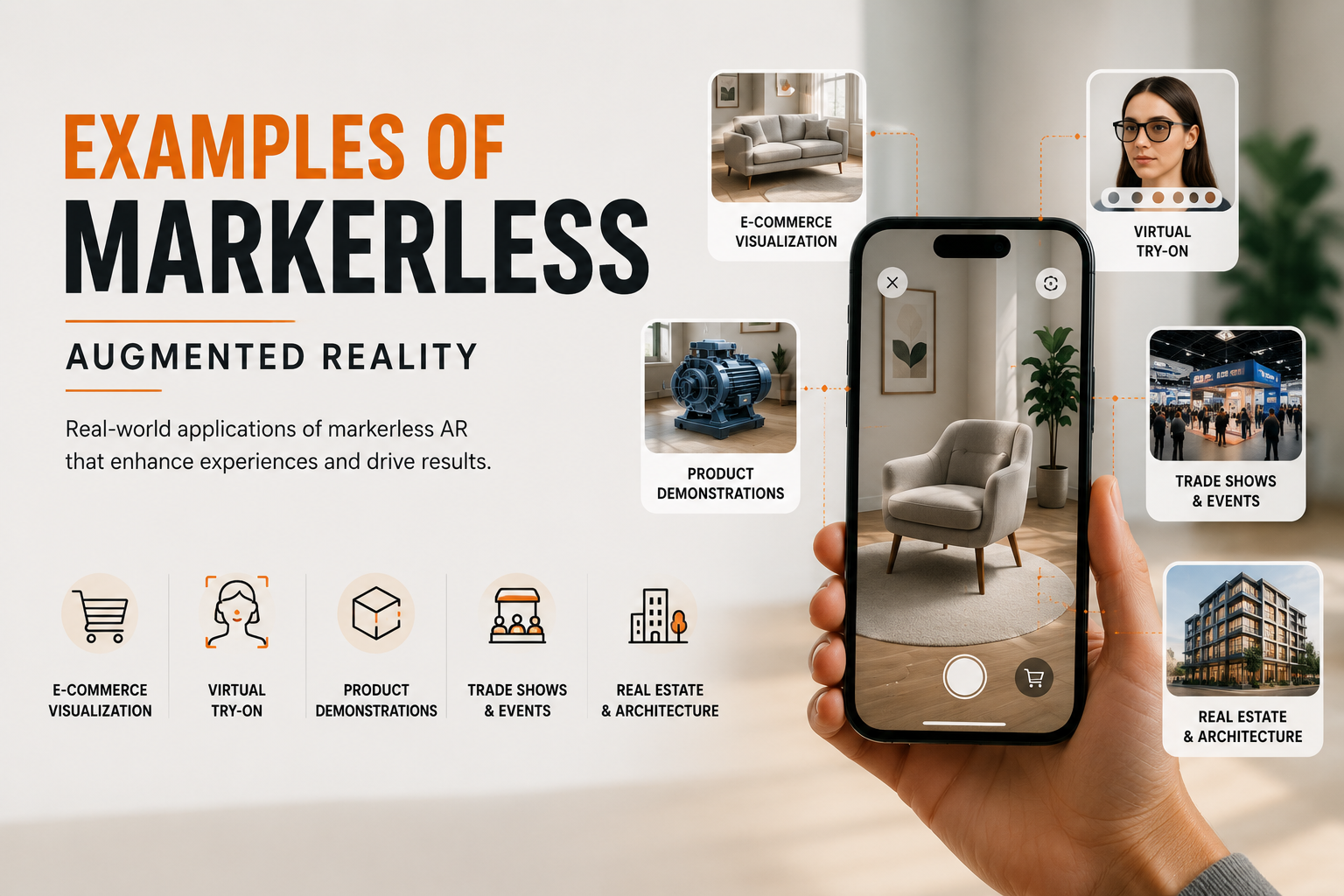
There are many practical markerless augmented reality examples that businesses can explore.
1. E-Commerce Product Visualization
E-commerce is one of the most obvious applications for markerless AR.
- Online customers often struggle to understand how a product will look or fit in their environment.A furniture company could allow shoppers to place a virtual sofa, table, or chair in their home.
- A home décor brand could allow customers to preview different products in a room.
- An electronics company could let customers visualize how a television, speaker, or other device might look in their space.
Instead of asking customers to imagine the product, AR gives them a way to experience it.
2. Virtual Try-On Experiences
Fashion and beauty brands can use augmented reality to create virtual try-on experiences.Customers can preview certain products digitally before purchasing.This can make online shopping more interactive and give customers additional information during the buying process.The experience doesn’t replace good product photography or product descriptions. Instead, it adds another layer of information.
3. B2B Product Demonstrations
Markerless AR can also be valuable for B2B businesses.Many B2B products are too large, technical, or expensive to demonstrate everywhere.Imagine a company selling industrial machinery.Instead of transporting the complete machine to every potential client, a sales representative could use an interactive 3D or AR model.The customer could explore the product, view components, understand its structure, and see how it works.This can make complex information easier to communicate during sales meetings.
4. Trade Shows and Events
Trade shows are highly competitive.Businesses often have only a few seconds to attract a visitor’s attention.An interactive AR experience can turn a traditional product display into something visitors can explore.Rather than simply looking at a product, visitors could interact with a digital model, discover product features, or experience a virtual demonstration.
5. Real Estate and Architecture
Real estate and architecture businesses can also benefit from AR.A potential customer could visualize furniture inside a space, explore a proposed interior, or interact with a representation of a future development.AR can make concepts easier to understand when traditional photographs, drawings, or floor plans aren’t enough.
How Augmented Reality Is Changing Digital Marketing
Traditional digital marketing often relies on content that customers watch, read, or click.AR introduces another possibility: interaction.Instead of simply seeing a product advertisement, a customer can interact with the product.Instead of reading about how something looks in a particular environment, they can visualize it.Instead of watching a standard demonstration, they can explore a digital model.This shift from passive consumption to active participation is one of the reasons AR marketing is becoming interesting to businesses.However, the goal shouldn’t be to use technology simply because it looks impressive.The technology should have a purpose.
Benefits of AR Marketing for Businesses
When implemented thoughtfully, augmented reality marketing can offer several advantages.
Increased Engagement
Interactive experiences encourage customers to participate instead of simply consuming content.
Better Product Visualization
AR can help customers understand the appearance, size, or placement of a product.
Stronger Brand Experiences
An interactive experience can make a brand more memorable than a conventional advertisement.
Easier Product Demonstrations
Complex products can sometimes be explained more effectively through 3D visualization and interactive experiences.
More Interactive E-Commerce
AR can add another layer to online shopping by allowing customers to experience products within their own environments.
These benefits don’t mean every business needs an AR campaign. The technology works best when it addresses a specific customer or business challenge.
AR Marketing for E-Commerce Businesses
For e-commerce brands, the biggest opportunity may be reducing the gap between online shopping and physical shopping.
When customers visit a physical store, they can see a product from different angles, compare its size, and understand how it fits into their surroundings.Online shopping removes much of that physical interaction.AR can bring some of that experience into the digital environment.For example, a customer purchasing furniture can visualize it inside their home before making a decision.This can make the shopping experience more informative and engaging.AR can therefore become a useful part of an e-commerce marketing strategy, especially for products where appearance, size, and context matter.
AR Marketing for B2B Businesses
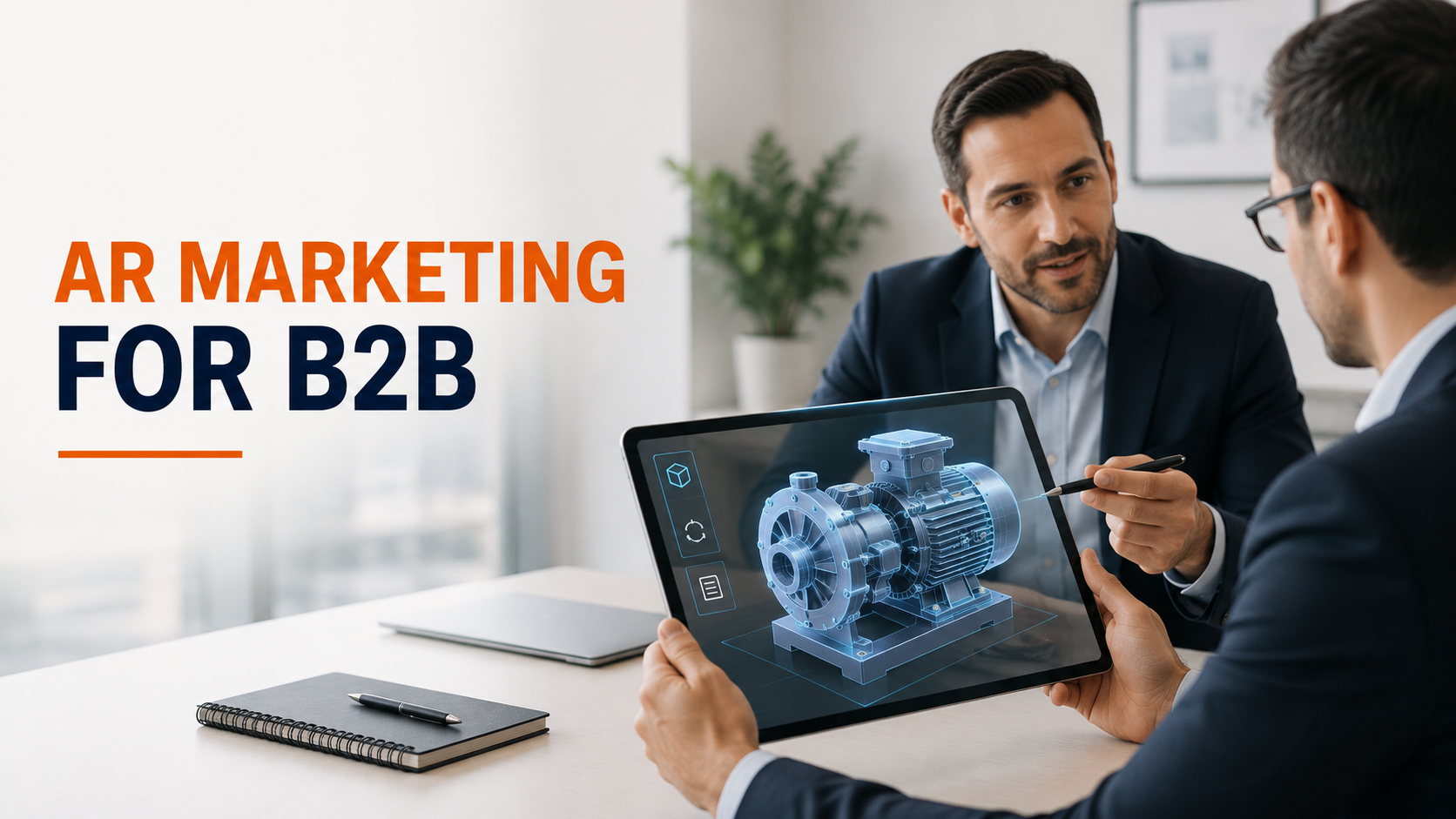
B2B marketing has different challenges.A B2B company may sell complex equipment, customized solutions, software-connected hardware, or industrial products that are difficult to explain through standard marketing materials.AR can support these businesses by making technical information more visual.Companies can use AR for:
- Sales presentations
- Product demonstrations
- Technical visualization
- Employee training
- Trade shows
- Interactive catalogs
- Customer education
- Remote demonstrations
The goal is not to replace the sales team.It is to give them a more powerful tool for communicating value.
How to Build AR Into Your Marketing Strategy
AR should not exist separately from your overall digital marketing strategy.A successful campaign should begin with the customer and the business objective.Ask questions such as:
What problem are we solving?
Who will use the experience?
Where will customers discover it?
What action should they take afterward?
How will we measure success?
For example, an e-commerce company may use SEO and social media to attract customers, content marketing to educate them, and AR to help them visualize a product before purchasing.A B2B company could use content marketing to explain a technical solution and AR to provide an interactive demonstration.This approach makes AR part of a complete customer journey rather than a standalone technology experiment.
Is Augmented Reality Just a Marketing Trend?
AR may be exciting, but businesses should avoid using it simply because it is trending.A successful AR experience should provide genuine value.If customers can understand a product more easily, visualize it in their environment, explore its features, or make a more confident purchasing decision, AR has a clear purpose.If the experience doesn’t improve anything, it may simply become a gimmick.The best augmented reality marketing combines technology with a clear understanding of the audience, product, and business objective.
The Future of Augmented Reality Marketing
- The relationship between the digital and physical worlds is becoming increasingly connected.
Smartphones, 3D content, computer vision, spatial technologies, and wearable devices are creating new possibilities for businesses. - For e-commerce brands, this could mean more interactive product experiences.For B2B companies, it could mean more effective product demonstrations and sales presentations.
- For marketers, it creates another way to turn digital content into an experience.As AR technology continues to develop, businesses that understand how to use it strategically may have new opportunities to differentiate themselves.
The future of marketing isn’t simply about getting someone’s attention.
It’s about giving them an experience worth remembering.
Frequently Asked Questions
What Is Markerless Augmented Reality?
Markerless augmented reality is a type of AR that places digital content into the real world without requiring a predefined physical marker, printed image, or QR code.
What Is the Difference Between Marker-Based and Markerless AR?
Marker-based AR relies on a specific visual target to activate or position digital content. Markerless AR uses environmental information, sensors, and computer vision to position digital content without requiring a predefined marker.
What Are Some Markerless Augmented Reality Examples?
Common examples include virtual furniture placement, virtual try-ons, product visualization, interactive advertisements, real estate visualization, virtual showrooms, and 3D product demonstrations.
Can E-Commerce Businesses Use Markerless AR?
Yes. E-commerce businesses can use markerless AR to allow customers to visualize products in their homes or surroundings before making a purchase.
Can B2B Companies Use AR Marketing?
Yes. B2B companies can use AR for product demonstrations, sales presentations, technical visualization, training, trade shows, and customer education.
Is Augmented Reality Useful for Digital Marketing?
AR can be useful when it solves a genuine marketing or customer-experience problem. It can improve product visualization, engagement, communication, and interactive brand experiences.You can read more
Experience the Future with AWGZO
At AWGZO, we combine technology, creativity, and digital marketing to help businesses create experiences that customers don’t just see; they interact with.
Whether you’re an e-commerce business looking for better product experiences or a B2B company searching for a more engaging way to demonstrate your solutions, augmented reality can create new possibilities.
The future of marketing isn’t only about being seen. It’s about being experienced.