

What is Augmented Reality?
Understanding Augmented Reality
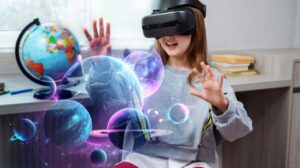
Augmented Reality (AR) is a technology that overlays digital content—such as 3D models, animations, videos, and interactive elements—onto the real world using smartphones, tablets, or AR-enabled devices. Instead of replacing reality, AR enhances it, creating engaging and interactive experiences for users.
Today, AR is used across industries including retail, healthcare, education, real estate, manufacturing, and entertainment, making digital interactions more intuitive and impactful.
Why Businesses Are Investing in AR
Businesses are embracing Augmented Reality because it delivers measurable value beyond traditional marketing.
- Increase customer engagement
- Improve shopping experiences
- Reduce product returns
- Boost conversion rates
- Enhance brand storytelling
- Create memorable customer experiences
- Build stronger customer confidence
As consumer expectations continue to evolve, AR is becoming a competitive advantage rather than a luxury.
How AR is Transforming Industries
Retail & E-Commerce
Customers can visualize products in their homes or try them on virtually before making a purchase, leading to more confident buying decisions.
Education
Interactive 3D learning experiences make complex concepts easier to understand and significantly improve student engagement.
Healthcare
Medical professionals use AR for surgical planning, medical training, and patient education with enhanced visual guidance.
Real Estate
Buyers can take immersive property tours, visualize interiors, and explore spaces remotely before visiting in person.
Manufacturing
AR assists technicians with maintenance, assembly instructions, and real-time operational guidance, improving productivity and reducing errors.
The Benefits of Augmented Reality
Augmented Reality creates meaningful interactions between brands and customers by combining innovation with convenience.
Higher Customer Engagement
Interactive experiences capture attention longer than traditional content.
Better Buying Decisions
Customers can explore products in real-world environments before purchasing.
Increased Sales
Immersive product experiences encourage faster purchase decisions and higher conversion rates.
Reduced Returns
When customers understand exactly what they’re buying, return rates naturally decrease.
Stronger Brand Recognition
Innovative experiences leave lasting impressions that strengthen brand loyalty.

The Future of Augmented Reality
The future of AR is powered by artificial intelligence, spatial computing, wearable technology, and WebAR experiences that require no app installation.
As technology becomes more accessible, businesses of every size will be able to deliver immersive customer experiences that were once only available to large enterprises.
Organizations that adopt AR today will be better positioned to lead tomorrow’s digital economy.